purchase of assets through banking channel or digital means
Purchase of Assets Through Banking Channel or Digital Means - Income Tax Ordinance, 2001 – Pakistan
In Pakistan, the Federal Board of Revenue has introduced strict documentation rules to discourage cash transactions in high-value purchases. One important provision in the Income Tax Ordinance, 2001 requires certain assets to be purchased only through proper banking channels or digital means. This rule promotes transparency, prevents tax evasion, and supports a documented economy.
What Does the Law Say?
According to the law, no person is allowed to purchase:
- Immovable property such as land, house, plot, or building having a fair market value of more than Rs. 5,000,000 or
- Any other asset having a fair market value of more than Rs. 1,000,000
unless the payment is made through:
- Crossed cheque
- Crossed demand draft
- Crossed pay order
- Any other crossed banking instrument
- Or through digital means that is online bank transfer, mobile banking, etc.
In simple terms, if you are buying expensive property or assets, you cannot pay in cash. The payment must be made from one bank account to another bank account so that a proper financial record exists.
What is Immovable Property ?
Immovable property includes houses, commercial buildings, agricultural land, and residential plots. If the value of such property exceeds 5,000,000, the payment must be made through banking channels.
What is Fair Market Value?
For immovable property, fair market value means:
- The value notified by the Federal Board of Revenue (FBR) under section 68(4), or
- The value fixed by the provincial authority for stamp duty purposes
Whichever value is higher will be considered. This prevents buyers and sellers from understating the property value to avoid compliance.
What Happens If You Do Not Follow This Rule? : Failure to comply with this provision can result in serious tax consequences:
1. No Tax Allowances or Depreciation
The asset will not qualify for tax allowances under Sections 22, 23, 24, and 25 of the Income Tax Ordinance. This means you cannot claim depreciation or other tax benefits on that asset.
2. Cost Not Recognized for Capital Gains
When you sell the asset, the purchase price may not be accepted as the cost under Section 76. As a result, your taxable capital gain may increase, leading to higher tax liability.
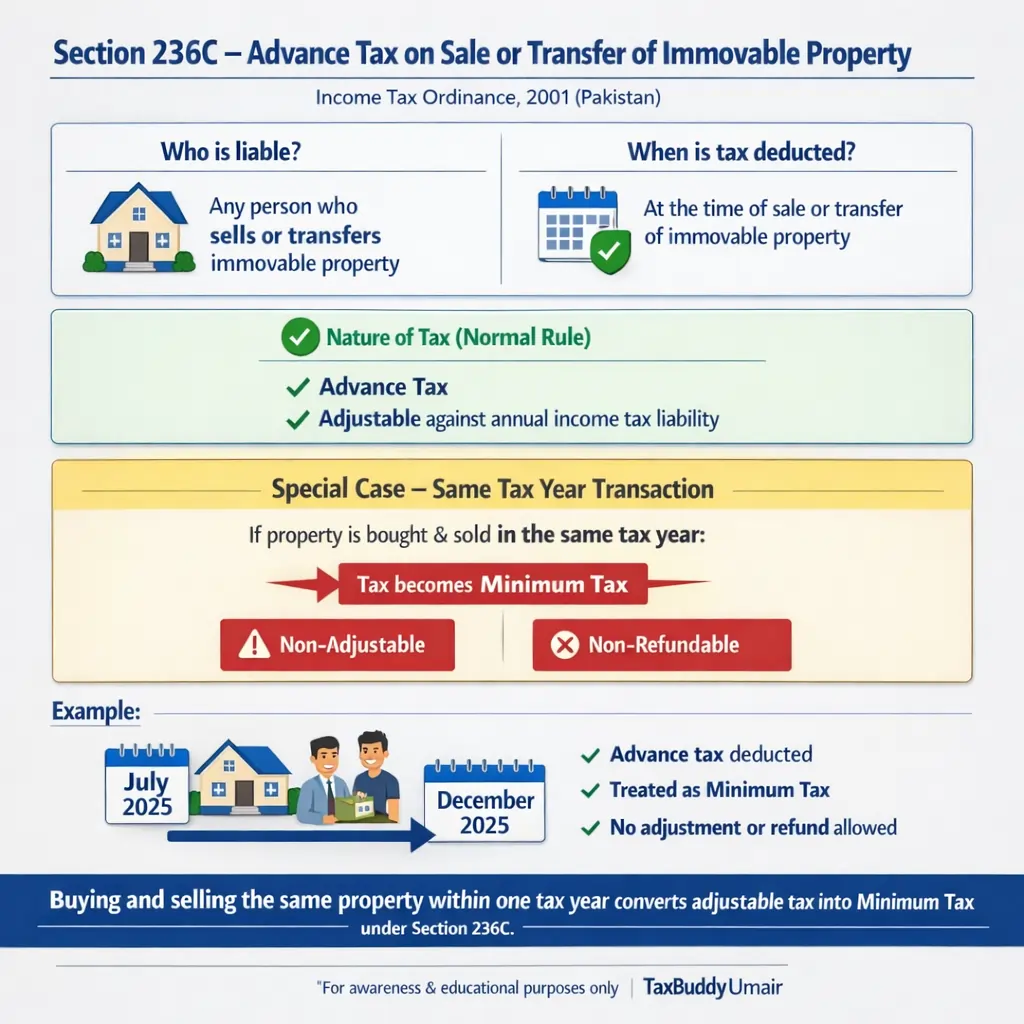
For example, if you purchase property worth Rs. 8 million in cash and later sell it for Rs. 10 million, the tax authorities may refuse to recognize your purchase cost. This could significantly increase your taxable Capital Gain.
E.g Purchase Property Rs. 8,000,000/-
Later sell the property Rs. 10,000,000/-
Capital Gain Tax = Sale Price - Purchase (10,000,000 - 8,000,000 = 2,000,000)
Note : if you violate the section 75A the cost could be disallowed and could be taxed on 10,000,000/-
Why This Law Matters
The purpose of this rule is to:
- Reduce the use of black money
- Encourage digital and banking transactions
- Improve tax compliance
- Strengthen Pakistan’s documented economy
Conclusion : If you are purchasing property above 5,000,000 or any other asset above 10,000,000, always ensure the payment is made through a bank or digital channel. Avoid cash transactions for high-value assets. Following this rule not only keeps you legally compliant but also protects you from future tax complications.